
The idea that anything or anyone could be born broken relies on the conceit that the born thing must have at one time in its past been in good working order to begin with. Still the feeling that nothing worked the way it should have from the start weighs heavily on any number of people I know.
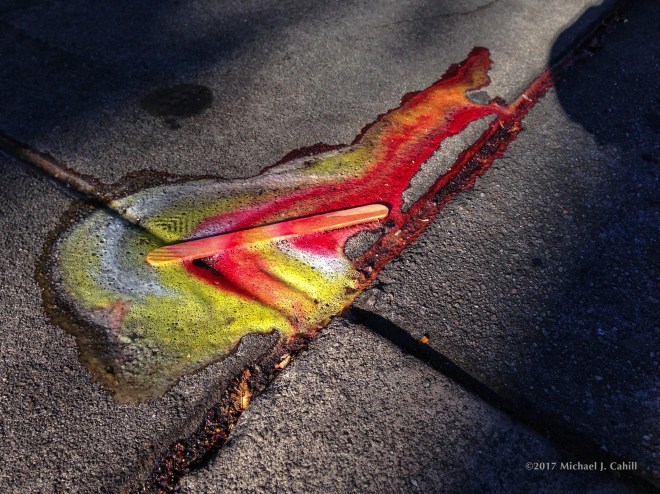
It’s wrong in my opinion to identify with one’s damage. We are more than our broken places, more than our shattered intentions, more than deeds we couldn’t bring to life or heroes we never quite managed to become. We are far better than our shortcomings, which are so necessary to guide us in our quest to better ourselves. In this regard there are two kinds of people — those consumed by their mistakes and those inspired by them.
It is pointless to walk a mile in another man’s shoes simply to discover how he feels. If you are a true human being, walk the most difficult mile there is to walk — in your own shoes. Only then will you own every success and failure and only then will you understand the breadth of emotions that any other man feels in running that gamut. If he has done the same then he will know you as well.
I am not unsympathetic to the struggles of another. I merely realize that I must first understand the nature of struggle itself before I presume to compare mine to theirs. Unwell though we may be, and occasionally crushed and devoid of all that makes us beautiful, it is incumbent upon us to keep getting up, to keep moving forward, to leave defiant footprints in the efforts we make to grow beyond our damage. Brokenness only works to our benefit when we leave it behind.
 Nouveau Scarecrow
My imperfections are what make me awesome. I cannot draw or write for crap, I do not see myself as creative. Though I acknowledge now, my doodles and terrible tales are loved by many. They are better than I gave them credit for, and I can convey a message in each.
Feck purfection. The broken pieces are not broken, they are usually just different. That’s all.
Great photo. We might as well embrace the imperfect. Kintsugi is the process of repairing broken pottery with gold/silver. This treats breakage and repair as simply part of an object’s history. Something could even become more desirable after it has been repaired.
What a delightful insight, Liz — Kintsugi. I like that very much. Thank you for a keen observation.